

Earn from the writing you have already published. List your work on Atlas today!
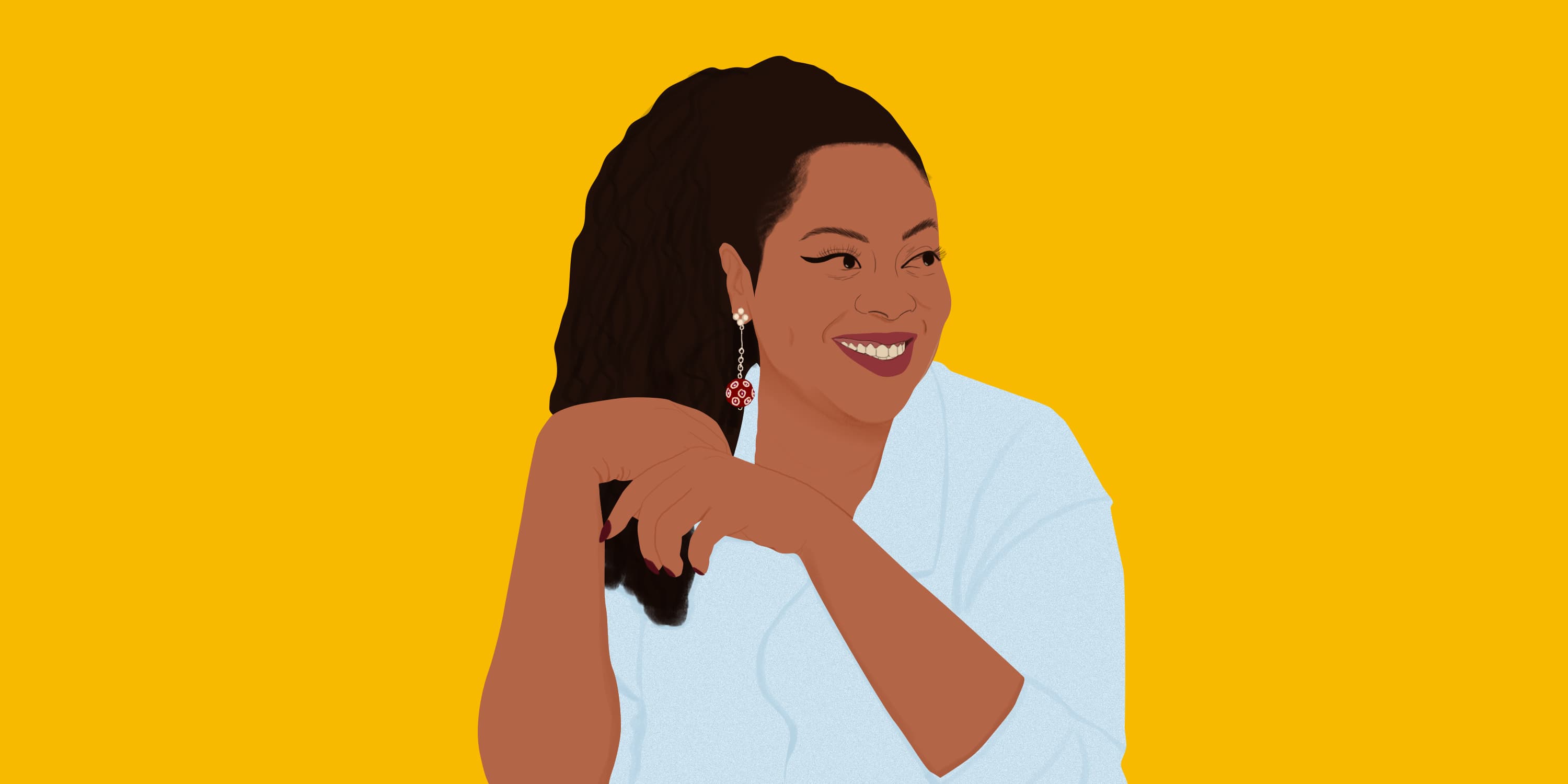
When author, Oreoluwa George-Taylor was writing ‘Everything I Desire is for Me’, she wanted a relatable entry point: ‘Most people hate fitting rooms, and most people have tried on something that didn’t fit quite right, so I knew readers would know what I meant.’
First Draft is our interview column, featuring authors and other prominent figures on books, reading, and writing.
Our questions are italicized.
What books or kinds of books did you read growing up?
I didn’t learn to read until I was about six or seven—much later than my peers. For the longest time, it just didn’t click, and then, one day, it did. I read almost every Roald Dahl book, but Mathilda and The Twits were my favourites. I loved that Mathilda was a little girl like me who loved to read and loved the library. My mum was an avid reader, and she started taking me to the library once a week when I learned how to read. The library became my favourite place to visit. The novelty of choosing multiple books to take home with me never got old. I read the Roald Dahl books for at least two years every night. Sometimes, I’d skip to my favourite chapters and just re-read those before going to sleep. Eventually, I graduated to other genres, although fiction remains my favourite. Like most millennials, the Harry Potter series was arguably the cornerstone of my foray into books.
Perhaps because of my experience of being the only Black person in my primary school, I gravitated towards stories about race and Black children in the UK. I distinctly remember immersing myself in Malorie Blackman’s Noughts and Crosses series. Still, even earlier than that, I remember a book called Face by Benjamin Zephaniah. Stories that centred difference and how lonely it can be on the margins of communities stood out to me. The most impactful story of my childhood was probably The Diary of A Young Girl by Anne Frank. The thing that struck me most when reading young Anne Frank’s words was just how ordinary so many of her thoughts and feelings were despite what was happening to her family at the time. I didn’t fully understand the Holocaust then. Hence, the context was a little different for me. Still, I understood fear, isolation, frustration, and curiosity. I admired her commitment to telling her story even if no one else would ever hear it or read it.
Focused consumption without interruptions.
Decades of reporting at your fingertips.
Long-form journalism that matters.
About the Author
is a new writer based in Lagos.



Nigerian novelist, poet and author of Graceland, Chris Abani, does not believe ‘Nigerian literature’ exists as a category: ‘It is a common misconception that there is a fixed category that can be read as essentially “Nigerian literature”. Nigeria has 500 nations, 500 languages and about 2,000 dialects. While culture and language can overlap, the level of diversity is such that Nigerian literature cannot be easily narrowed down.’

For the co-founder and publishing director, of Cassava Republic Press, which marks its 20th anniversary this year, Bibi Bakare-Yusuf, it is telling that African literature is often pronounced dead in recent years, when more women and queer voices are becoming more prominent: ‘The loudest obituary writers about African literature tend to be men. These elegies seem to come from a tacit sense of personal or generational displacement rather than from the actual state of the field.’

Nigerian poet, novelist and author of Madame Sosostris and the Festival for the Broken-Hearted, Ben Okri, argues that Nigerian literature doesn’t always have to be about Nigeria: ‘Nigerian literature limits itself to Nigeria and then limits even the ways in which the country can be written about. What we want is a vast literature, a great literature…that speaks to all humanity.’


Comments
Sign in to comment.