

Earn from the writing you have already published. List your work on Atlas today!
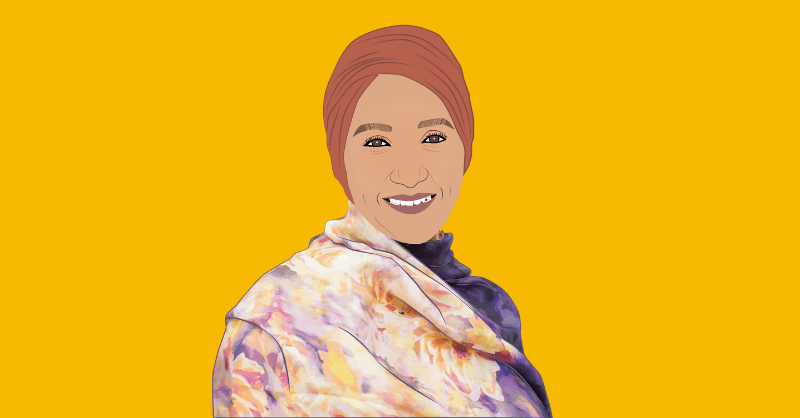
Award-winning writer and Sudanese novelist, Leila Aboulela, discovered Akuany, the protagonist of her most recent novel, River Spirit, on a bill of sale in the Sudan Archives at Durham University: ‘I knew that slavery existed in nineteenth century Sudan, but it was still a shock to hold in my hand proof of it, with a monetary figure and the names of buyer and seller.’
I feel as if my life is constantly shifting, moving, and slipping away.

Focused consumption without interruptions.
Decades of reporting at your fingertips.
Long-form journalism that matters.
About the Author
is a Sudanese writer and the first winner of the Caine Prize for African Writing. Her sixth novel, River Spirit, was published in March 2023 and described by The New York Times as ‘Dazzling… a novel of war, love, faith, womanhood and–crucially–the tussle over truth and public narratives’. Nobel Laureate, Abdulrazak Gurnah, described it as ‘A novel of extraordinary sympathy and insight–a wonderful achievement.’ Leila’s previous novels are Bird Summons, The Kindness of Enemies, The Translator, Minaret, and Lyrics Alley, Fiction Winner of the Scottish Book Awards. Her short story collection Elsewhere, Home, won the Saltire Fiction Book of the Year. Leila’s work has been translated into fifteen languages and she was nominated three times for the Orange Prize (now the Women’s Prize for Fiction). She is Honorary Professor of the WORD center at the University of Aberdeen.



Nigerian novelist, poet and author of Graceland, Chris Abani, does not believe ‘Nigerian literature’ exists as a category: ‘It is a common misconception that there is a fixed category that can be read as essentially “Nigerian literature”. Nigeria has 500 nations, 500 languages and about 2,000 dialects. While culture and language can overlap, the level of diversity is such that Nigerian literature cannot be easily narrowed down.’

For the co-founder and publishing director, of Cassava Republic Press, which marks its 20th anniversary this year, Bibi Bakare-Yusuf, it is telling that African literature is often pronounced dead in recent years, when more women and queer voices are becoming more prominent: ‘The loudest obituary writers about African literature tend to be men. These elegies seem to come from a tacit sense of personal or generational displacement rather than from the actual state of the field.’

Nigerian poet, novelist and author of Madame Sosostris and the Festival for the Broken-Hearted, Ben Okri, argues that Nigerian literature doesn’t always have to be about Nigeria: ‘Nigerian literature limits itself to Nigeria and then limits even the ways in which the country can be written about. What we want is a vast literature, a great literature…that speaks to all humanity.’


Comments
Sign in to comment.