‘I Had to Treat My Debut Novel Like a Job’
Ghanaian novelist and author of What Napoleon Could Not Do , DK Nnuro, says his debut novel was inspired by his experiences: ‘Since relocating to the US from Ghana, I have had one foot firmly placed among Black immigrants—Ghanaian immigrants, specifically—and another among Black Americans.
By DK Nnuro
October 28, 2023
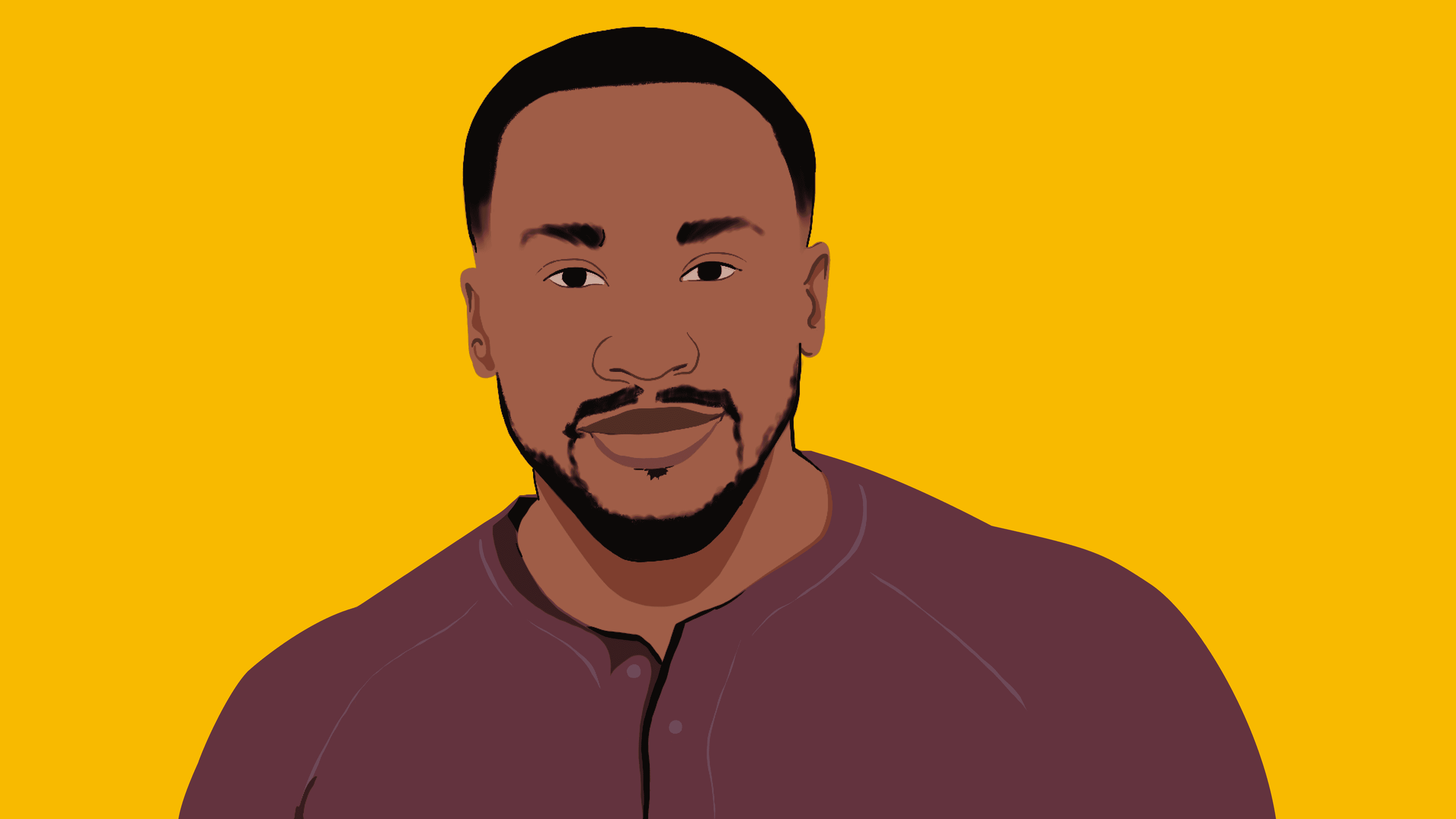
Photo Illustration by Kevwe Ogini / THE REPUBLIC.
First Draft is our interview column, featuring authors and other prominent figures on books, reading, and writing.
Our questions are italicized.
What books or kinds of books did you read growing up?
If your life so far was a series of texts, which text (fiction or non-fiction) represents you at this moment?
If only my boring life could be the stuff of fiction or nonfiction. But I realized a major dream this year. So, I would say that any character who realizes a major dream in the course of a literary work should suffice as an analog.
What’s the last thing you read that changed your mind about something?
Hanya Yanagihara’s
A Little Life made me less suspicious of melodrama; or perhaps the appropriate term might be James Wood’s ‘hysterical realism’. In any case, I have been freed of such concerns in my own work.
“It is important for me to give some of my forebearers their flowers: Ama Ata Aidoo, Ayi Kwei Armah, Kojo Laing, Francis Selormey, P. A. K. Aboagye, and Kwame Anthony Appiah.
What is your writing process: edit as you write or draft first, then edit?
A combination of both. I edit sentences as I write. I edit big picture matters intermittently. And, of course, I edit draft after draft until someone says, ‘enough’.
What was your process for writing your debut novel, What Napoleon Could Not Do?
I had to treat my debut novel like a job. Monday to Friday: wake up at 5 a.m., at my desk at 5:30 a.m., I take two fifteen-minute breaks, then call it a day at around 9:30/10 a.m. This was my process for three years, more or less.
Your debut novel, What Napoleon Could Not Do, explores the contrasting perspectives of African Americans and Black immigrants regarding the United States. What inspired this story?
The novel opens in Ghana, specifically Kumasi, which is south-central Ghana and where I was born. But I was raised in Accra, Ghana’s capital, until I moved to LA before my eleventh birthday. Since relocating to the US from Ghana, I have had one foot firmly placed among Black immigrants—Ghanaian immigrants, specifically—and another among Black Americans. It was natural that I would explore the tensions between the two in a novel.
And what’s one thing about the reactions to the novel that surprised you?
I appreciate how several readers have made it a point to note the novel’s humor. I didn’t think this would be the case, as I thought readers would want to mine the tragic moments and not the moments of levity. I have been pleasantly surprised.
What books would you say are in conversation with your novel?
Before answering this question, it is important for me to give some of my forebearers their flowers. People like Ama Ata Aidoo, Ayi Kwei Armah, Kojo Laing, Francis Selormey, P. A. K. Aboagye, Kwame Anthony Appiah, I could go on and on. These are the people who paved the way for me; especially
Ama Ata Aidoo. Her novel,
Changes, is one that I would say I am most intentionally in conversation with. The novel is about a career-centred Ghanaian woman, Esi, who divorces her first husband and marries into a polygamous union. How subversive is that?! How unexpected?! An ostensible feminist and modern woman divorcing her husband for a polygamous union because she believes the arrangement will offer her the freedom she desires! In my novel, Belinda, also an ostensible feminist and modern woman makes choices that might seem to contradict feminism. But just like Esi, Belinda also believes that these choices are the path to the freedom she desires.
“In my novel, Belinda, also an ostensible feminist and modern woman makes choices that might seem to contradict feminism.
You currently work as a curator of special projects at the University of Iowa Stanley Museum of Art. What is the most fascinating artwork you have encountered recently?
That’s an easy one. The artwork on the cover of my book: Amoako Boafo’s masterful Courtesy. Boafo is arguably Ghana’s foremost contemporary portraitist. Just look at the cover of my book. Wow!
What’s something simple but surprising about writing and publishing a book?
The fact that the book is very much out of your hands after a publisher buys it is a simple idea because, duh, what else should you expect? But the extent to which it is out of your hands can be, well, jarring.







Comments
Sign in to comment.