‘After the End of History Comes More History’
South African historian and author of History of South Africa: From 1902 to the Present, Thula Simpson, believes the most common misconception about South African history is related to apartheid: ‘Many believe that apartheid is the central thread of South African history, the overwhelming fact, the unifying category to which all roads and streams must lead, and which can explain all. In fact, apartheid is a specific period in a much longer history of segregation, and it cannot be understood except in the context of that wider story.’
By Thula Simpson
November 17, 2023
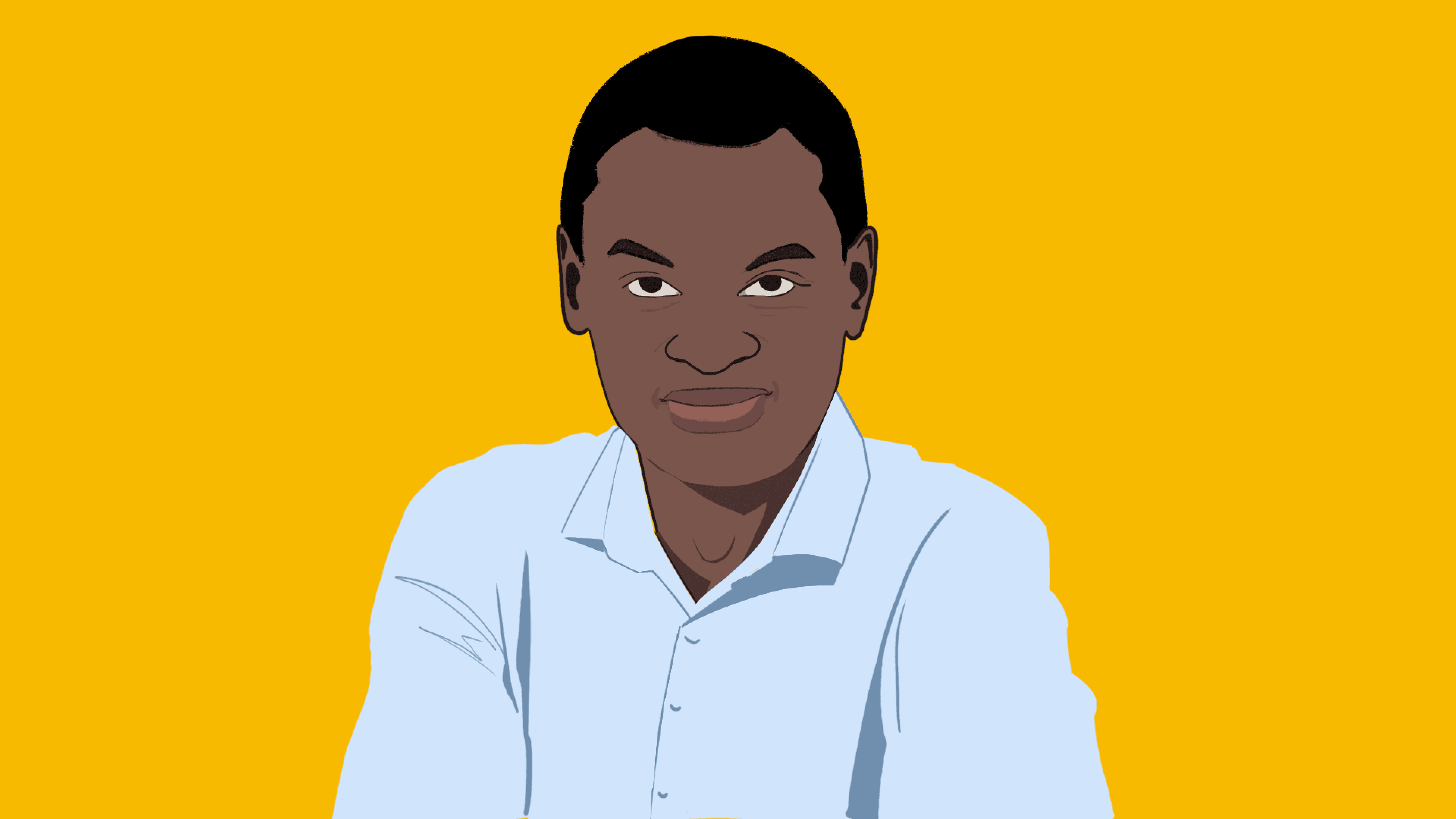
Thula Simpson. KEVWE OGINI
First Draft is our interview column, featuring authors and other prominent figures on books, reading, and writing.
Our questions are italicized.
What books or kinds of books did you read growing up?
I was raised in London in the late analogue age, so my first book purchasing forays involved going to Foyles, Blackwell’s, and Waterstones—all the great bookstores in the centre of town. History books were well represented among these first voluntary additions to my personal library. But it was books chosen for me—whether prescribed at school or purchased for me by my family—that originally kindled that interest. Regarding the latter, my family wanted to preserve the connection with South Africa and among the books they provided to enable that were
The Mind of South Africa by Allister Sparks, and
The Reader’s Digest Illustrated History of South Africa. The
Encyclopaedia Britannica was also an important reference work. But I should not telescope my recollections based on the path that my life eventually took. I say this because my tastes were broad.
Among the books I own that have the most worn spines are Hugh McIlvanney’s
On Football, Brian Glanville’s
Story of the World Cup, and Nick Hornby’s
Fever Pitch. Harry Shapiro and Caesar Glebbeek’s
Jimi Hendrix: Electric Gypsy is another. So I must not make it appear as though I was fixed from my teens on history. I just transpired in later years that I was a better historian than I was a footballer or rock guitarist! Among the historical works, Orlando Figes’s
A People’s Tragedy, and James McPherson’s
Battle Cry of Freedom are two that immediately stand out.
In your earliest days as a historian/history student, what books were foundational to your study and research?
At Chiswick Community School in West London, the history curriculum was perhaps inevitably oriented towards modern British history. Malcolm Pearce and Geoffrey Stewart’s
British Political History, 1867-2001: Democracy and Decline was the prescribed textbook, and it was a great choice. It provided all the necessary content, even for the university undergraduate course that I subsequently took at King’s College. It provided a solid foundation of fact on which interpretations could float freely.
Regarding research, the spur for my doctorate on Umkhonto we Sizwe was Howard Barrell’s
MK: The ANC’s Armed Struggle. At a mere 77 pages, it was more booklet than book, but it offered a compact synthesis, informed by insider accounts, of the problems the African National Congress (ANC) faced in developing an operational strategy capable of overthrowing the apartheid regime. But in the last couple of pages came a twist. There, Barrell referred to negotiations that had just begun (the book was published in 1990), and in doing so he harkened back to MK’s founding documents which expressed a reticence about waging a full-scale civil war and expressed a preference for a negotiated settlement. His very final words were that if the negotiations succeeded, the ANC would have paradoxically succeeded in its original aim of going to war to avoid war. He did not develop this angle further, and my doctorate sought to explore both the underlying paradox and the extent to which the course of the ANC’s armed struggle could be reinterpreted if one unravelled it.
What’s the last thing you read that changed your mind about something?
I constantly read writers who change my mind on all manner of subjects large and small. But the most fundamental change (if not the most recent) came from reading William James, and particularly his
Essays in Radical Empiricism, which analyzes the role of concepts in regulating perceptual life. Basically, anticipating Wittgenstein, he argued that it is only when ideas are divorced from their practical function that confusion over meanings emerge. This has implications for historians, and the humanities generally, for reasons Ralph Waldo Emerson explained in his address on the ‘
The American Scholar’, namely that as societies advance in complexity, essential functions become more specialized, and as they branch off from each other, their original unity can become blurred. Within the division of labour, Emerson wrote, the academic is accorded the function of ‘Man [sic] Thinking’, but he warned against the danger of losing sight of the inherent relationship between thought and action.
As my answer already indicates, there are a lot of thinkers whose work contributed to the development of this perspective: I would add Alfred North Whitehead, Henri Bergson and John Dewey to them. They complement and reinforce each other, but I would single out James as the most influential on me (he also happens to be one of the greatest prose stylists that I have ever read). Their work serves as a necessary corrective to the high abstraction and practical irrelevance that has come to characterize theorization in the humanities.
“I constantly read writers who change my mind on all manner of subjects large and small. But the most fundamental change came from reading William James, and particularly his essays in radical empiricism, which analyzes the role of concepts in regulating perceptual life.
What is the last book/text you disagreed with, and why?
I recently read Adam Sisman’s
biography of A. J. P. Taylor, having read Kathleen Burke’s biography of the subject many years ago. In discussing Taylor’s significance as a historian, they tend to accept without questioning the critique advanced by his contemporaries that his use of new media in his case television—as a platform through which to disseminate his views, undermined his seriousness as a historian. But I kept thinking that Taylor surely deserves to be credited as one of the first of the modern historians in that regard, and that as the discipline probes ways of extending its ‘impact’ in an ever-changing technological environment, he could well still be a prophetic figure.
There is one important change from my earlier book on Umkhonto we Sizwe (MK), namely that in the intervening years I had tried to develop a pattern that avoids using paper as an intermediary. Why? Papers get scattered, they get lost, they are rarely there when you have a flash of inspiration, after a certain amount of revision and crossing out things becomes illegible, paper creates clutter, and the more you produce the more time you have to devote to simply duplicating material when typing up. As a time- and space-saver I tried to overcome that. It was not easy as there were all sorts of hardwired patterns involved, but by the time of the book, I was practiced in the new approach, and the book developed entirely on it.
Besides that the process was the same as ever: there is the flash of inspiration, there is the research part, there is the organizing and structuring of research findings, and polishing and refining to the point where there is a serviceable author’s draft that can be developed with the publishers into a version ready to be shared with the world.
Why was it important that you wrote this book?
The last wave of writing on the general history of South Africa occurred around the great transition of 1994. That change provided a clear narrative frame, namely that of the rise of democracy and the overcoming of apartheid. But after the end of history comes more history, and the post-apartheid era has birthed new trajectories whose origins are important in understanding the present. By the mid-2010s, a number of chronic crises had emerged which by my understanding placed the country on the brink of change as profound as that experienced a generation earlier. The process of navigating those waters would require historians to play an important role, I believed, and I developed the book as a contribution to that task.
What sources or cultural influences helped develop this book?
My initial research on MK drew on the great declassification of archives accompanying the end of apartheid. The liberation movements were keen to get their story out to counter state narratives, and when in power were also keen to expose the old regime’s dirty laundry. So the records of both the regime and the resistance became available in abundance. These were supplemented in due course by international records that emerged following more conventional declassification processes. One of my aims with this book was to insert myself into traditional debates about South African history. The new archives enabled me to do that. Another objective was to extend the historical narrative forward into the post-apartheid era. The new archives helped me to trace the origins of certain prominent post-apartheid themes. Regarding events in the post-apartheid era itself, a striking feature of researching them was the impact of the digital migration, and specifically how much primary material is being livestreamed, blogged, tweeted, and uploaded at any given moment. To use these records as research material is to be aware that global tech companies sit on archives of a scale and richness that has no comparison in human history. It is not even close. We historians have not even begun to grapple with the implications of that shift for our discipline.
“After the end of history comes more history, and the post-apartheid era has birthed new trajectories whose origins are important in understanding the present.







Comments
Sign in to comment.