‘If There’s a Book You Want to Read and Cannot Find, Write It!’
Nigerian novelist and author of Like a Mule Bringing Ice Cream to the Sun , Sarah Ladipo Manyika, wants young authors in Africa and the African Diaspora to take inspiration from a wide array of art forms.
By Sarah Ladipo Manyika
March 16, 2024
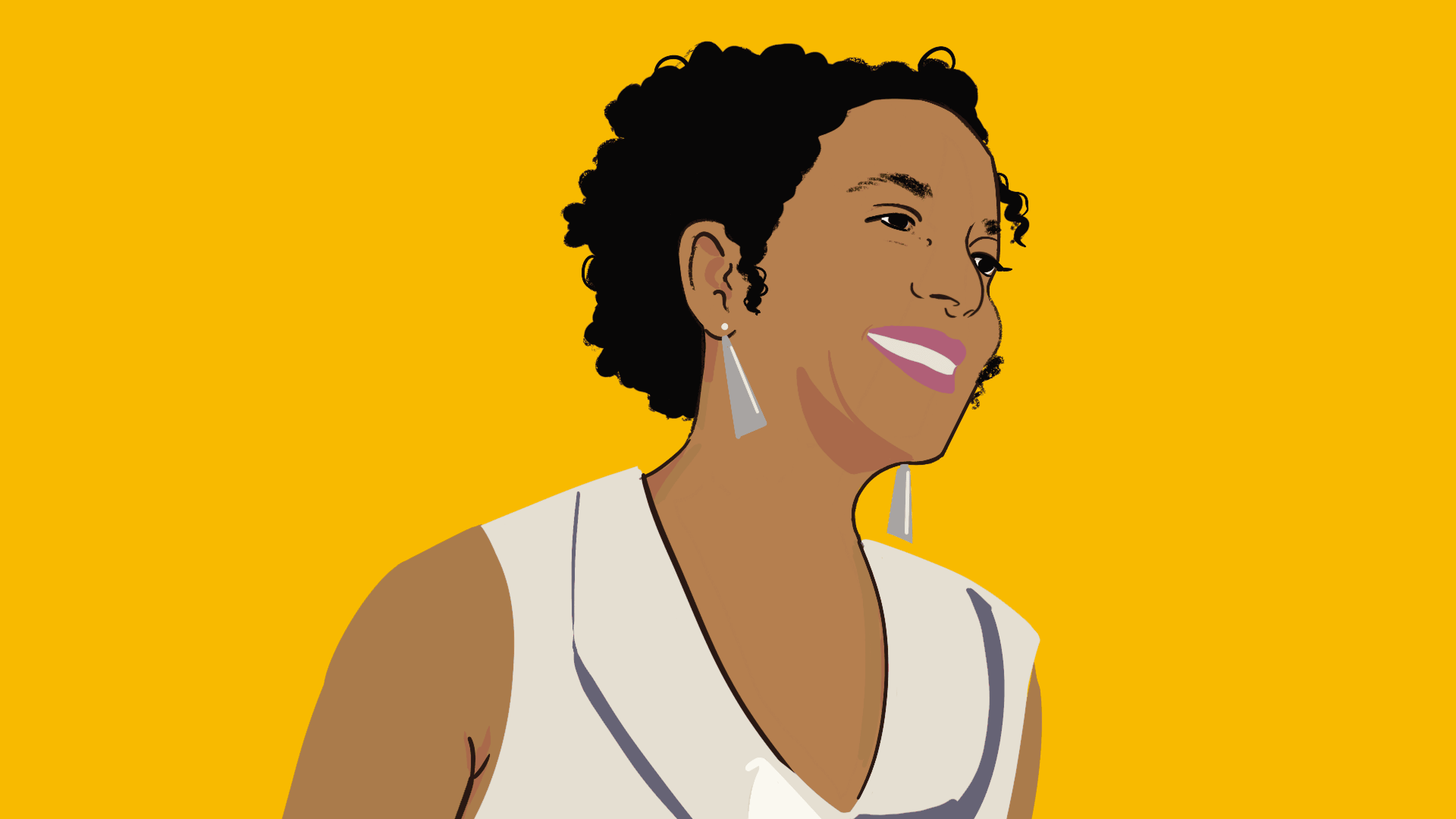
Sarah Ladipo Manyika. Illustration by Kevwe Ogini.
First Draft is our interview column, featuring authors and other prominent figures on books, reading, and writing.
Our questions are italicized.
What books or kinds of books did you read growing up?
Thanks to my mum, I read many Puffin classics. I loved the miniature Beatrix Potter books, Richard Adam’s
Watership Down, and tales of Brer Rabbit. As a child, I was a voracious reader, of books and of people, and still am an inveterate eavesdropper and people-watcher. Snippets of overheard conversations and the faces of people not usually noticed often inspire the stories I write. Wondering about other people’s life stories is what I do.
If your life so far was a series of texts, which text (fiction or non-fiction) represents you at this moment?
In these tumultuous times, I keep returning to James Baldwin’s essays and in particular to his
Notes of a Native Son. He reminds me of the importance of holding on to two seemingly contradictory ideas at the same time: staying committed to the struggles against injustices while keeping one’s heart free of hatred and despair.
What’s the last thing you read and disagreed with?
I tend to disagree with most end-of-year ‘best of’ arts lists, not so much for what’s on the lists but for what gets overlooked. In the realm of recent films for example, I would have loved more attention to Steve McQueen’s
Small Axe series, especially his sonic and visual gem,
Lovers Rock and the same for Jeymes Samuel’s directorial debut,
The Harder They Fall, a casting tour-de-force. On the writing front,
Yewande Omotoso’s novel,
An Unusual Grief—a book about friendship, sex, grieving, domesticity, and depression is one that deserves more attention.
You’re also interested in film. What book would make a great film or drama series?
Oh, there are so many! When I think of feature films, I imagine the intense drama of Nawal El Saadawi’s
Woman at Point Zero; the quiet grief, as well as the eroticism of Yewande Omotoso’s
An Unusual Grief; the forbidden wartime love story of Chinelo Okparanta’s
Under the Udala Trees. Short stories such as Segun Afolabi’s ‘Monday Morning’ would also make for powerful and timely feature length films. In the realm of a TV series, I think of Wole Soyinka’s political satire
Chronicles From The Land of the Happiest People On Earth and NoViolet Bulawayo’s
Glory, which might also lend itself to an animated film. There are so many exciting prospects within the genre of documentary films too. Take Hugh Masekela’s
Still Grazing—how visually and sonically fabulous such a film could be.
“I tend to disagree with most end-of-year ‘best of’ arts lists, not so much for what’s on the lists but for what gets overlooked.
What’s the last thing you read that changed your mind about something?
Henry Louis Gates Jr’s op-ed piece in the New York times, Who’s Afraid of Black History? didn’t change my mind on the topic but it brought much needed perspective and insight to the current curriculum debates in the US.
What is your writing process: edit as you write or draft first, then edit?
Much to my detriment, I tend to edit while I write. I’m trying to change that for the novel I’m currently working on so that I draft first and then edit.
What was your process for writing your debut novel In Dependence? The 1960s struck me as such an exciting decade in which to start the novel—it was the time of independence movements across Africa, the Civil Rights movement in the US, and various countercultural movements across Europe. Artists ranging from Bob Dylan to Fela Kuti and the Beatles were amongst many to herald this change. But because I hadn’t lived through this decade myself, I had to do a lot of research for In Dependence for it to feel as historically authentic as possible. I loved the research which included reading back issues of local magazines and newspapers and interviewing people who’d lived through the period.
For my second novel, I did almost no historical research. With Like a Mule Bringing Ice Cream to the Sun I played much more with form and with voice than I’d done in the past. As such, it was particularly gratifying to have the novel shortlisted for the Goldsmiths Prize, a prize that rewards innovative approaches to fiction.
Like a Mule Bringing Ice Cream to the Sun is the story of individuals struggling to find their place within uncertain political times. What inspired this story?
Whenever I can’t find stories that I want to read, I try writing them for myself. In this case, I’d met many older women who’d lived colorful lives and yet when it came to fiction, I didn’t find stories that mirrored these lives, especially so when it came to the lives of Black women.
“The 1960s struck me as such an exciting decade in which to start the novel—it was the time of independence movements across Africa, the Civil Rights movement in the US, and various countercultural movements across Europe.
Your latest book, Between Starshine and Clay, documents conversations with some of the most distinguished Black thinkers of our times, including Toni Morrison and Wole Soyinka, on race, decolonisation, systemic inequalities, and the climate crisis. What inspired this work? This book came out of a personal search for greater perspective, inspiration and hope in the context of the current turbulence of our world. I’ve had the great privilege of getting to know the twelve people featured in this book, which allowed me to go beyond their public profiles to the more intimate conversations. They’ve all been an inspiration to me and as such I wanted to share their stories more widely.







Comments
Sign in to comment.