

Our new print issue, Africa’s Hustle Republics, is here! Subscribe for less than ₦1K/$1 a week for full access.
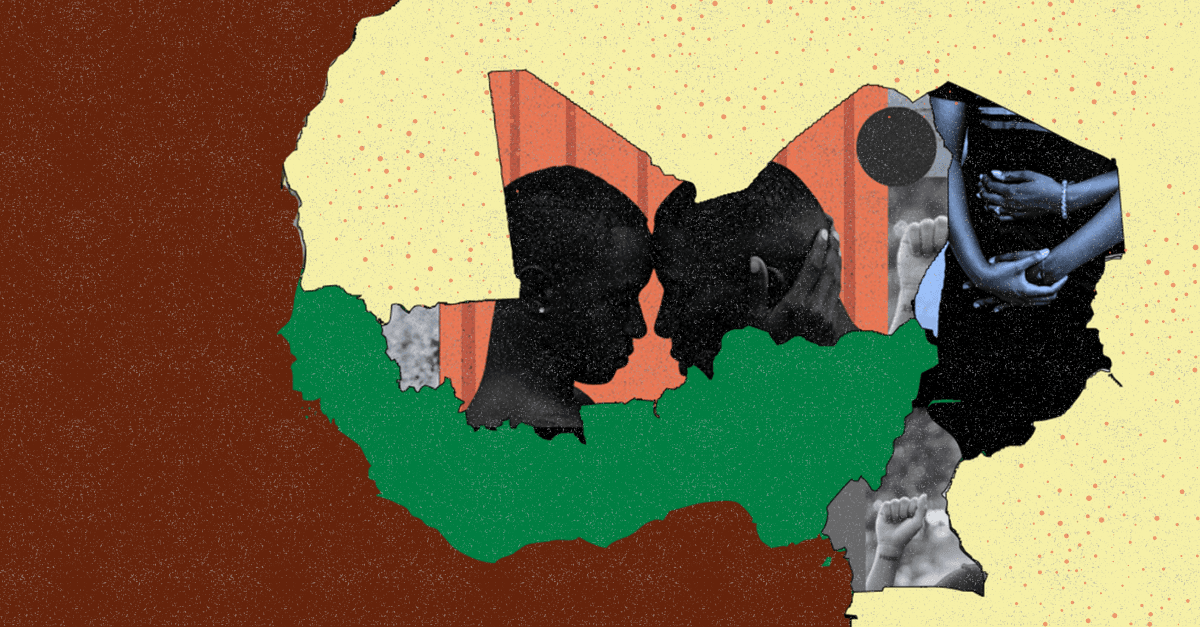
As ECOWAS celebrates its 50th anniversary, it has an opportunity to redefine its vision for the future. A decolonized West Africa must be one where all individuals—regardless of their sexual orientation or gender identity—can live with dignity and freedom.
May 25, 2025
Photo Illustration by Ezinne Osueke / THE REPUBLIC. Source Ref: PEXELS.
As the Economic Community of West African States (ECOWAS) celebrates its 50 years anniversary, it is a momentous occasion to reflect on its achievements and challenges, especially on the lives of indigenous gender and sexual minorities living in West Africa. Founded in Lagos, Nigeria, by 15 out of 16 states in West Africa in May 1975, the birth of ECOWAS marked the beginning of what was considered a new era in economic cooperation and development in West Africa. Its founding treaty emphasized the importance of mobilizing particularly the young population of men and women living in West Africa for the development of its states.
Specifically, the Revised Article 63 of the ECOWAS treaty mandated that it focused on developing policies and programs to enhance the economic, social and cultural conditions and realities of women on the West African region. The recognition of the importance of promoting gender development to eradicate poverty has motivated ECOWAS to integrate gender considerations and critical concerns of women into its policies, programming and initiatives. Its Gender Development Centre, for instance, established in 2003, is a hub for mobilizing, advancing and empowering women across member states in West Africa. While this is commendable, its engagement with gender and sexual minorities in West Africa and the issues that affect them socially, economically and politically have notably been silent in its 50 years of existence. This silence reflects the state of the rights of gender and sexual minorities in many West African states, which have often justified discrimination against queer people and the LGBTI+ community by referencing ‘African culture’.
The Republic is a Nigerian media-tech company dedicated to explaining our time—through deeply reported journalism on power, culture and society.
Focused consumption without interruptions.
Years of reporting at your fingertips.
Long-form journalism that matters.
Create a free account to continue reading this month and access more of our work.
About the Author
is an intersex and transgender researcher and archivist indigenous to the Akan community in Ghana.




Comments
Sign in to comment.