

Our new print issue, Africa’s Hustle Republics, is here! Subscribe for less than ₦1K/$1 a week for full access.
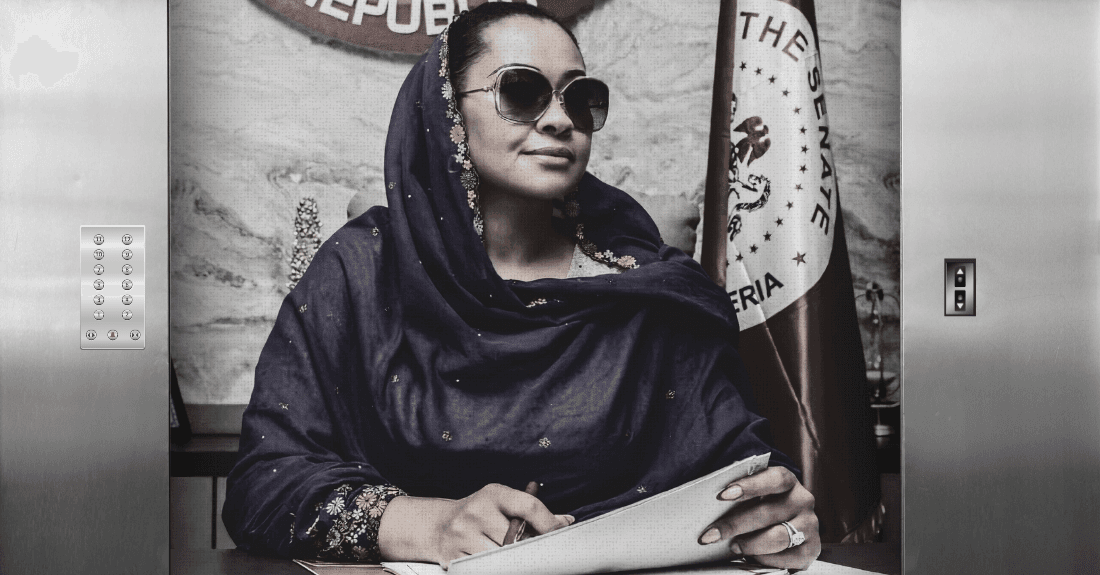
When Nigeria’s upper chamber punished Senator Natasha Akpoti-Uduaghan with a six-month suspension after she spoke up about harassment, the act didn’t just close a door on one woman—it revealed the fragile hinges of gendered power that determine who may even touch the handle in African politics.
Jun 8, 2025
Photo illustration by Dami Mojid / THE REPUBLIC. Source Ref: NATASHA AKPOTI / IG.
On 6 March 2025, Senator Natasha Akpoti-Uduaghan was suspended from the Senate for six months without pay after accusing the Senate president of Nigeria, Godswill Akpabio, of sexual harassment. The Senate denied any connection between her suspension and the allegation, instead citing gross misconduct and unruly behaviour during sessions. However, the optics of punishing a female lawmaker for speaking out against a powerful male colleague have reignited national and continental conversations about gender, power and political solidarity in Africa.
The former minister of education, Dr Oby Ezekwesili, and women’s groups such as the Interfaith Women Alliance for Justice and Women’s Voice for A New Nigeria, have challenged Senator Akpoti-Uduaghan’s suspension. They argue that it reflects the systemic harassment and discrimination women face in political institutions and workplaces. Yet beyond the specifics of this case, the incident raises critical questions about how gender shapes both access to and the exercise of political power. It is a stark reminder that gender equity goes beyond symbolic representation—it is fundamentally about power, legitimacy and the ability to resist entrenched structures of exclusion.
Women’s participation in African parliaments has seen modest gains in recent years. In 2021, women held approximately 25 per cent of parliamentary seats across the continent; by 2024, that number had increased slightly to 26 per cent. These incremental improvements, however, mask deeper structural barriers—particularly in Nigeria, where female political representation remains among the lowest in Africa. Under President Bola Ahmed Tinubu’s administration, women comprise just 15 per cent of his cabinet and only 4 per cent of the National Assembly—far short of the 35 per cent affirmative action target outlined in his Renewed Hope Manifesto.
The Republic is a Nigerian media-tech company dedicated to explaining our time—through deeply reported journalism on power, culture and society.
Focused consumption without interruptions.
Years of reporting at your fingertips.
Long-form journalism that matters.
Create a free account to continue reading this month and access more of our work.
About the Author
is a visiting assistant professor of practice at New York University’s Center for Global Affairs and a Public Voices Fellow. Her research focuses on African security issues, governance and international relations.




Comments
Sign in to comment.