

Our new print issue, Africa’s Hustle Republics, is here! Subscribe for less than ₦1K/$1 a week for full access.
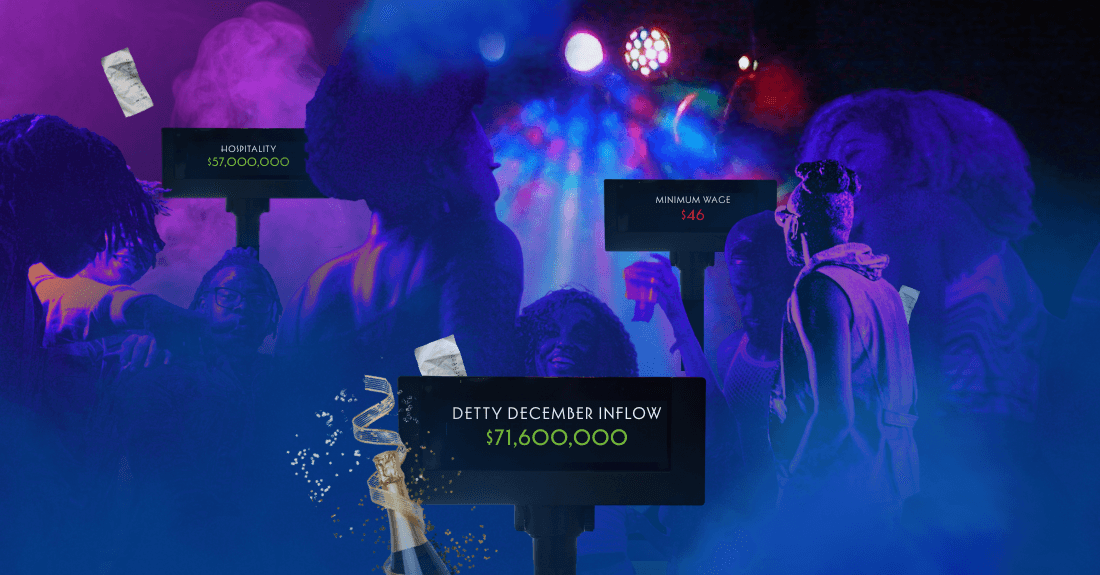
The beginning of the second half of the year signals plans for Lagos’ glitzy Detty December, a seasonal spectacle that generates short-term profits for a privileged few while deepening inequality, fuelling inflation and missing opportunities for sustainable and inclusive economic growth.
Every December, Lagos transforms into a carnival of its own. Already, plans are already underway for this year’s own. The city’s streets heave with traffic as luxury SUVs jostle with rickety buses, all ferrying revellers from one sold-out concert to the next. Champagne bottles pop in VIP sections overlooking swaying crowds, while excited returnees from abroad—the self-styled ‘IJGB’ (I Just Got Back) diaspora—hop between high-end beach clubs and neon-lit concerts. This month-long frenzy of concerts, parties, weddings and festivals, colloquially known as ‘Detty December’ has in recent years become Nigeria’s most anticipated social season.
Its reputation is dazzling: a yuletide homecoming extravaganza that draws Nigerians from around the globe and even some international tourists to the ‘entertainment capital of Africa’. However, by the new year, as exhausted partygoers head home, a more sober reality sets in. Beneath the glitter and good times lurks a troubling economic puzzle: who really benefits from Detty December, and at what cost to the broader society?
On the surface, the economic numbers from Detty December look impressive. According to Lagos State officials, the 2024 festive season pumped over $71 million (about ₦54 billion) into the local economy across tourism, hospitality and entertainment. Hotels alone accounted for roughly $44 million of that windfall, as every room in the city seemed booked by visitors eager to join the festivities. Private shortlet apartments and Airbnbs added another $13 million or more, underscoring how lucrative the year-end rush has become for property owners.
The Republic is a Nigerian media-tech company dedicated to explaining our time—through deeply reported journalism on power, culture and society.
Focused consumption without interruptions.
Years of reporting at your fingertips.
Long-form journalism that matters.
Create a free account to continue reading this month and access more of our work.
About the Author
is a writer and published researcher, with a strong focus on inclusive development and cultural economics.


Comments
Sign in to comment.