

Our new print issue, Africa’s Hustle Republics, is here! Subscribe for less than ₦1K/$1 a week for full access.
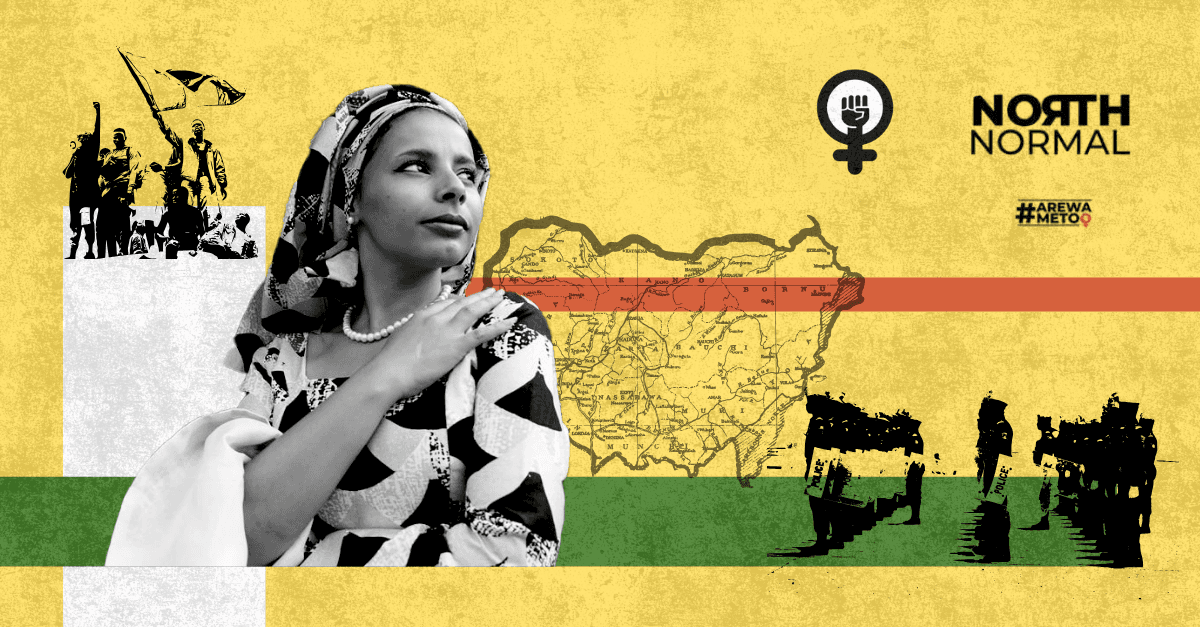
Member of the Feminist Coalition and organizer of the #ArewaMeToo and #NorthNormal movements, Fakhrriyyah Hashim, reflects on #EndSARS five years after ‘Feminists against SARS’ redefined national consciousness on police violence.
Five years ago, young Nigerians created a movement that was many things all at once. For two weeks in October 2020, #EndSARS was a mass offline movement across several states in Nigeria, as young Nigerians across ethnic, class and religious lines organized with hopes that their future could be different. It was digital activism that can be traced as far back as 2017, using Twitter for mass coordination and awareness. It was feminist organizing, with the Feminist Coalition emerging to not just counter the overrepresentation of men’s experiences of police violence and silencing of women, but also to speak for women, who often bear the harshest brunt of social movements. It was a queer statement, as #QueerNigerianLivesMatter insisted that a movement against police violence that normalizes violence against queer lives was counterproductive. It was class solidarity, as upwardly mobile people and less mobile people recognized their shared vulnerability to state violence. It was also an anti-colonial refusal of the policing afterlives of British colonialism and the indigenous elite's continuation of these structures.
What is police violence? What is state violence? How did #EndSARS help us define both? #EndSARS revealed these to be within the same oppressive cycle of power where underpaid, exploited police officers redirect their own precarity onto Nigerian young people through extortion, harassment and too often, fatal encounters. As a result, Special Anti-Robbery Squad (SARS) officers targeted young people whose appearance and existence, locs, dyed hair, iPhones, being visibly queer, being a woman in ‘the wrong place’, were considered improper. #EndSARS showed how state violence operated: not just through individual bad actors weaponized by the state, but through an elite, exclusive structure that renders everyone unrepresented and oppressed.
The Republic is a Nigerian media-tech company dedicated to explaining our time—through deeply reported journalism on power, culture and society.
Focused consumption without interruptions.
Years of reporting at your fingertips.
Long-form journalism that matters.
Create a free account to continue reading this month and access more of our work.
About the Author
is an African feminist and interdisciplinary PhD student at Emory University, where her research examines the intersection of critical technology studies, African feminisms, and digital cultures. She is the Gender and Feminism sub-editor at The Republic.


Comments
Sign in to comment.